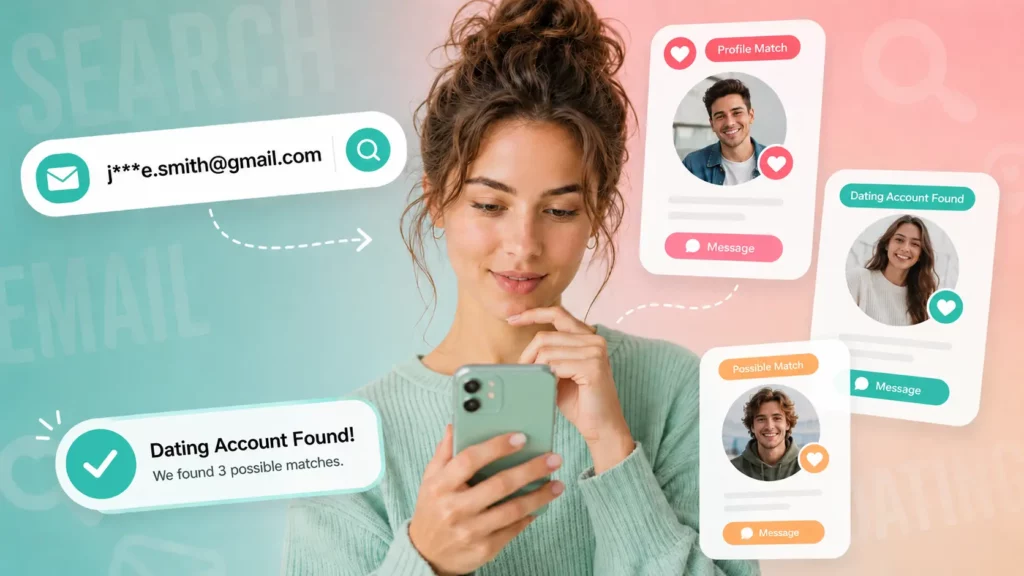
The most reliable way to find hidden dating profiles is a reverse phone or email lookup that checks a single piece of contact information against public records, data breach databases, and online account signals simultaneously. Enter your partner’s phone number or email into a tool like Searqle, and the report returns within minutes, showing any linked dating profiles, secondary social accounts, and identity records tied to that contact — without needing to check each platform individually.
Hidden dating profiles are not completely invisible. Most dating accounts are registered with a real phone number or email address, and those credentials leave traces across multiple platforms. This guide covers the methods that actually surface those traces, what each one finds, and how to interpret the results calmly and accurately.
Why Hidden Profiles Are Hard to Spot Without a Tool
Dating apps are built for privacy. Tinder, Bumble, Hinge, and similar platforms do not expose member directories to outside searches, and most accounts default to settings that prevent the profile from appearing in search engine results. You cannot type a name into Google and reliably find an active dating profile.
People maintaining hidden accounts add a second layer of concealment: a different first name or alias, a secondary email address created specifically for app registrations, and photos that do not appear on their public social media. Each of these makes a manual search harder.
What they cannot easily change is the phone number. Most dating apps require a real mobile number for verification, and that number is the most persistent link between an identity and its accounts. A reverse phone lookup exploits exactly that connection — checking the number against sources where it has been used, rather than searching inside any particular app.
Method 1: Reverse Phone Lookup
A reverse phone lookup is the strongest starting point for finding hidden dating profiles because phone numbers are both specific and durable. Even when someone creates a separate alias or email for a dating account, the mobile number tied to it for verification often connects back to their main identity through other registrations.
Searching manually — checking one platform at a time hoping to find a match — takes hours and still misses platforms you did not think to include. Searqle removes that problem: enter a phone number and the platform scans public records, online account signals, and breach databases for every linked identity and profile attached to that number. The report returns a consolidated view covering the person’s name, associated social profiles, address history, and any accounts connected to the same digital footprint. A search that might otherwise take an afternoon completes in minutes.
This is the method with the broadest coverage because it is not limited to a specific app or platform — it searches across the full range of public data where that number appears.
What a Phone Lookup Report Can Show
| Data Type | Examples |
| Identity records | Full name, age range, known aliases, linked profile photos |
| Dating and social profiles | Publicly connected accounts across platforms |
| Contact records | Secondary email addresses, additional phone numbers |
| Location history | Current and previous addresses, city and state records |
| Breach signals | Services the email or number was registered with, from known data breaches |
Results depend on how widely the number has been used online. A number reused across multiple accounts and platforms returns more than one registered only for a single private profile.
Method 2: Reverse Email Lookup
An email address is often more revealing than a phone number when a partner has taken steps to hide their dating activity. People commonly create a separate email account specifically for app registrations they want kept private, using a name or variation that differs from their main address.
If you come across an unfamiliar email address on a shared device, in a synced account, or in a saved password manager, running it through a reverse email lookup can expose the full network of accounts registered with it. A secondary email used only for hidden accounts will often surface exactly those accounts in the results — along with any identity records linked to that address across breach databases and public sources.
Method 3: Reverse Image Search
Profile photos are one of the most reliable trails a hidden dating account leaves behind. Even when someone uses a different name and email on a dating app, they often use a real photo — either one pulled from an existing social profile or a personal photo taken with their phone.
A reverse image search identifies where that photo appears publicly across indexed web pages. If the same image shows up on a dating profile under a different name, the search surfaces it. Searqle’s photo lookup goes a step further: rather than returning only a list of web page links, it cross-references the image against identity records and public account data, adding context about who the person is beyond just confirming where the photo appears.
This method works best as a follow-up once a phone or email lookup has returned a name or linked profile, using the profile photo to confirm the match and check for other accounts using the same image.
Method 4: Username Search
Some people reuse the same handle across multiple platforms, including dating apps. If you notice an unfamiliar username in a browser history, a saved password, a notification preview, or an app icon on a shared device, searching it across platforms simultaneously can reveal where that handle has been registered.
Username searches are narrow in scope — they only work when you already know the handle — but fast and useful as a confirmation step once a broader reverse lookup has returned a name or alias to investigate further.
How to Run a Hidden Profile Search with Searqle
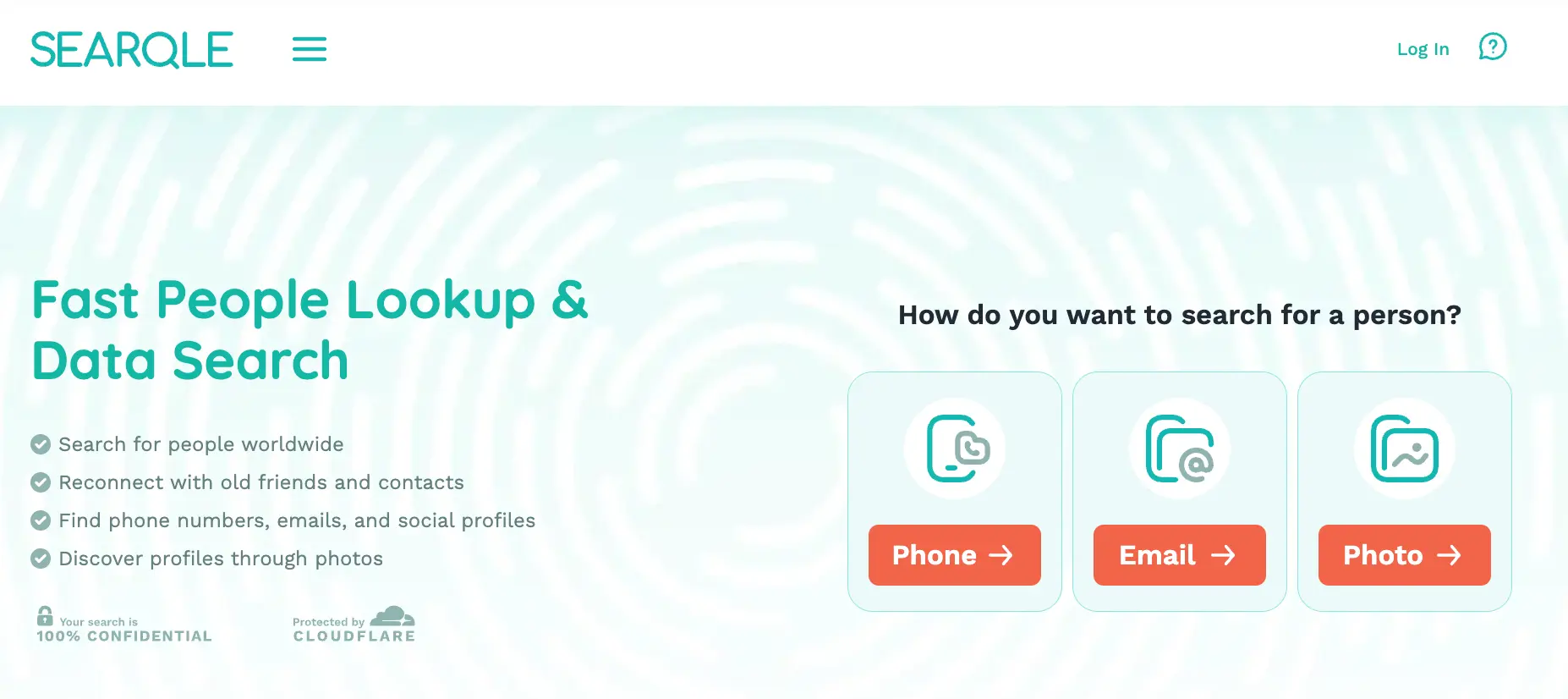
The most complete search combines a reverse lookup with a secondary image or username check. Here is the full process using Searqle:
- Open Searqle and choose your search input: phone number, email address, or photo.
- Enter the contact detail you have — the number they use most, an unfamiliar email you found, or a photo from their social media.
- Start the search. The platform scans public records, online account signals, and breach databases for anything connected to that input.
- Review the report for linked dating profiles, secondary accounts, name records, and any signals that the contact information has been used under a different identity online.
- If the report returns an alias or a secondary email, run those as separate follow-up searches to build a more complete picture.
The mechanism: Searqle compares your input against publicly available records and indexed account data, then consolidates matching results into one report. You are not checking Tinder, then Bumble, then Hinge, then OkCupid in sequence — the search maps the digital footprint of the contact information you entered, across sources, at once.
How to Read What You Find
A search report shows a digital footprint, not a verdict. Before drawing conclusions, it helps to understand what different results actually indicate.
| What You Find | What It May Mean |
| Active dating profile, recently updated | Profile is in current use — warrants a direct conversation |
| Old profile, no recent activity | May predate the relationship or have been forgotten — check dates carefully |
| Profile under a different name | Could be an alias for privacy, or deliberate concealment — context matters |
| Profile photo reused elsewhere | Same person confirmed; does not confirm intent or activity level |
| No results returned | Account may be private, registered under different credentials, or not yet indexed |
Dating profiles created before a relationship started carry different weight than recently active ones. The date of last activity, where visible, is one of the most important details in any result.
Common Signals That Prompt This Search
Most people looking for hidden dating profiles are not searching on a hunch alone. The most common triggers reported in community discussions and advice forums include:
- A phone that is guarded more than usual, including new screen locks or changed passwords on accounts that were previously shared.
- Unfamiliar app icons, including generic-looking apps that could mask a dating platform, or a VPN installed for unclear reasons.
- Browser history that has been cleared more frequently than before, or private browsing turned on as a habit.
- Receiving verification codes by SMS for services not recognised, which often signals a new account registration.
- Changes in communication patterns, including increased phone use during private times or delayed replies without a clear reason.
None of these individually confirms anything. They are signals that something may have changed, not evidence of what. A reverse lookup gives you verifiable information rather than requiring you to build conclusions from behavioural patterns alone.
Comparing Tools for Finding Hidden Dating Profiles
Several tools are used for this type of search. They differ in how many methods they combine and how much identity detail they return. The table below compares Searqle against the most commonly used alternatives on the criteria that matter when you are trying to surface hidden accounts connected to a real person.
| Feature | Searqle | SocialCatfish | UserSearch | CheatEye |
| Phone number lookup | Yes | Yes | No | No |
| Email lookup | Yes | Yes | Yes | No |
| Photo / image lookup | Yes | Yes | No | Limited |
| Identity & address records | Yes | Yes | No | No |
| Data breach exposure | Yes | Limited | No | No |
| Covers multiple platforms at once | Yes | Yes | Yes | Tinder only |
| Single consolidated report | Yes | Yes | No | No |
UserSearch and CheatEye are useful for narrow, platform-specific checks: UserSearch scans for handles across dating sites, CheatEye focuses on Tinder. Neither returns identity records or breach data, and neither consolidates results into one report. SocialCatfish and Searqle both offer multi-method searches with consolidated output. Searqle is the stronger choice when the goal is a complete picture of someone’s digital footprint — linking a phone number or email to the full network of accounts, addresses, and identity records attached to it — rather than confirming presence on a single app. It suits anyone who already holds contact information and needs to understand what that contact information is connected to online.
Legal and Emotional Considerations
Is This Search Legal?
Running a reverse lookup using publicly available data is legal in most regions. The information returned comes from public records, indexed web pages, and data breach databases — not from accessing private accounts, installing monitoring software, or intercepting communications. Using public data tools for personal safety and identity verification falls within accepted and lawful use in most jurisdictions.
The legal boundary is how results are used. Applying what you find to harass, stalk, or coerce someone is illegal regardless of how the information was obtained. If you are considering any action beyond a private conversation, consulting a legal professional first is the appropriate step.
Acting on What You Find
Discovering a hidden dating profile is the beginning of a conversation, not the end of one. Before acting on any results:
- Verify the match carefully: confirm the name, photo, and profile details in the report align with your partner and are not a different person who shares contact information.
- Note the dates: a profile created years before your relationship is a different situation from one with recent activity in your relationship’s timeline.
- Consider professional support: a relationship counsellor or therapist provides a structured space for this kind of conversation, which is often more productive than an unplanned confrontation.
- Take time before acting: decisions made in the immediate aftermath of a difficult discovery tend to benefit from a period of reflection, even if that period is short.
What you find in a search report is factual information about a digital footprint. What it means for your relationship depends on context that no tool can determine for you.
Start With What You Know
Finding hidden dating profiles starts with a phone number or email address and a search tool that checks it against the full network of public data attached to that contact. Manual app-by-app checking is slow, incomplete, and easy to miss. A reverse lookup covers the same ground in minutes.
If you have a number, an email, or a photo, Searqle turns a scattered and stressful search into one structured report — showing linked profiles, account records, and digital footprint in one place. Having accurate information, however difficult, is the foundation for any decision that follows.