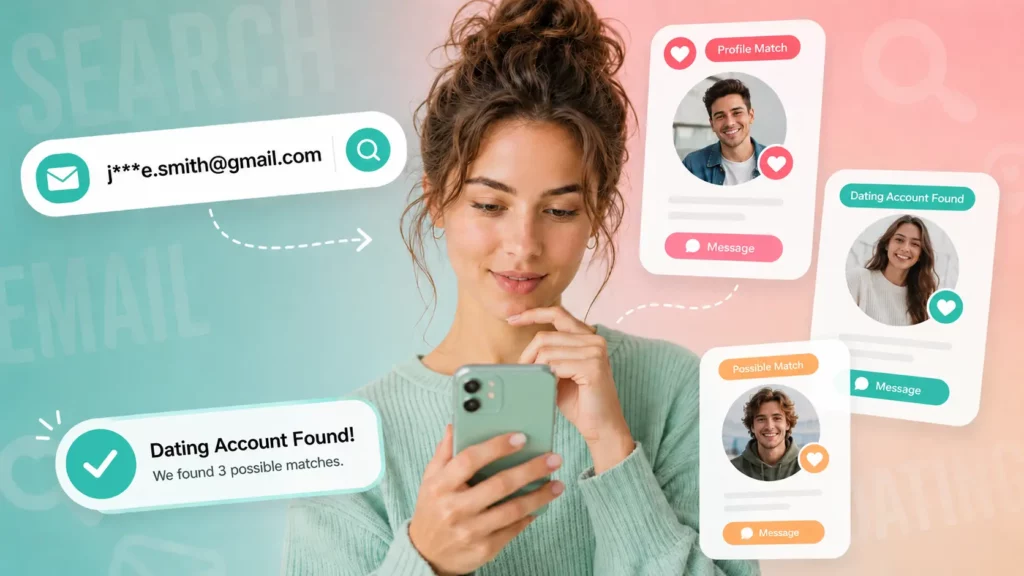
The most reliable way to catch a cheater online is to run a reverse phone or email lookup that scans public records and online accounts for hidden profiles, secondary social media, and dating app activity tied to that contact. Tools like Searqle take a phone number, email address, or photo, check it against public sources, and return a full report, including linked accounts, name records, and digital footprint, in a few minutes. The seven methods below go from fastest to most thorough, so you can start with what you already have.
Online infidelity leaves a digital trail. Hidden dating profiles, secondary email addresses, secret social accounts — all of these require a separate identity with some kind of public presence. The methods here focus on finding those traces using information you likely already hold: a phone number, an email, a photo, or a name.
7 Methods at a Glance
| Method | Best When You Have | Speed | Depth |
| 1. Reverse phone lookup | Their phone number | Fast (minutes) | High — identity + accounts |
| 2. Reverse email lookup | An email address | Fast (minutes) | High — linked profiles |
| 3. Reverse image search | A photo | Fast (minutes) | Medium — profile locations |
| 4. Username search | A handle or alias | Moderate | Medium — cross-platform |
| 5. Dating app check | Phone number or location | Moderate | Low — confirms app presence |
| 6. Social media audit | Their name or username | Slow (manual) | Low — public posts only |
| 7. Data breach check | Email address | Fast | Low — account existence |
Methods 1 and 2 return the most complete picture because they connect a single piece of contact information to the full network of accounts and records attached to it. The others work best as supporting checks once you have a name or username to work from.
Method 1: Reverse Phone Lookup
A reverse phone lookup is the fastest way to uncover hidden online activity when you have a phone number. The number acts as an anchor: many people register social media, dating apps, and messaging accounts with the same number they use personally, and those registrations create a traceable connection across platforms.
When someone suspects a partner is being dishonest online, they usually already have a phone number. Running it through a search tool cuts through hours of manual checking. Searqle takes the number, scans public and online sources for linked identity records and accounts, and delivers one consolidated report covering name, associated profiles, address history, and digital footprint. A search that would take hours of manual cross-referencing returns in minutes.
This is the strongest starting method because a phone number is both specific and persistent — people change usernames but rarely change the number attached to their main accounts.
What a Phone Lookup Can Surface
| Data Type | Examples |
| Identity | Full name, age, known aliases, profile photos |
| Online accounts | Social media profiles, public online accounts, professional profiles |
| Contact records | Linked email addresses, additional phone numbers |
| Location history | Current and previous addresses, city and state |
| Risk signals | Data breach exposure, mismatched names across accounts |
Method 2: Reverse Email Lookup
An email address is often more revealing than a phone number because people create separate email accounts specifically to register dating or social profiles they want to keep private. If you find an unfamiliar email address on a shared device or in a synced account, searching it directly can expose the full network of accounts attached to it.
A reverse email search works the same way as a phone lookup: the address is checked against public records, online accounts, and data breach databases to return a profile of the person behind it. A secondary email used only for hidden accounts will often surface exactly those accounts in the results.
Method 3: Reverse Image Search
A reverse image search helps when you have found a photo — a profile picture saved to a device, an avatar in a messaging app, or an image you do not recognise. Upload it to a search tool, and it scans indexed web pages for the same or visually similar images.
This method is particularly effective for spotting profiles that use a real photo under a false name, a common pattern with secret dating accounts. If the same face appears on a dating profile under a name different from your partner’s, the image search surfaces it directly. Searqle’s photo lookup cross-references the image against public records and online accounts, adding identity context to the visual match rather than returning only a list of web page links.
Method 4: Username Search Across Platforms
Many people reuse the same username or a close variation across multiple platforms. If you spot an unfamiliar handle in a browser history, a saved password, or a notification, searching it across social networks, dating apps, and forums can confirm how widely it is used and under what contexts.
Username searches are most effective as a follow-up tool: once a reverse lookup returns a name or alias, searching that string across platforms builds a more complete picture of where the person has an active presence.
Method 5: Check Dating App Activity
Dedicated cheater-detection tools like Cheaterbuster scan Tinder’s active deck by location and age range to confirm whether a profile matching your partner’s details is currently visible. This confirms app presence but returns limited identity detail: you see that a profile exists, but not the full account history or linked contacts.
These tools work best as a confirmation step after a reverse lookup has already returned a name or photo. They are narrow in scope — most cover one app at a time and charge per search — but they provide a direct answer on the question of whether an active dating profile exists.
Method 6: Manual Social Media Audit
A manual check means searching a person’s name, known aliases, phone number (if the platform allows it), and email address across major social platforms: Instagram, Facebook, Snapchat, TikTok, and Reddit. Most platforms surface public profiles in their own search, and some allow lookup by phone number if the user left that setting enabled.
This method is the most time-consuming and the least complete. Privacy settings block the majority of results, and a person maintaining a secret account almost always sets it to private. Treat a manual audit as a surface-level check rather than a primary method.
Method 7: Data Breach Check
Data breach databases contain email addresses, usernames, and account details exposed in historical security incidents. Searching an email address against a breach database shows which services that address was registered with, including dating platforms and adult content sites.
The limitation is recency: breach databases only include services that have had a confirmed public breach. An account on a platform that has never been breached will not appear. Use this as a supporting check alongside a full reverse lookup rather than a standalone method.
Comparing Catch-a-Cheater Tools
The tools available for these searches differ significantly in how many methods they combine and how much identity context they return. The table below compares Searqle against commonly used alternatives on the criteria that matter most when you are trying to verify someone’s online activity.
| Feature | Searqle | SocialCatfish | Cheaterbuster | iFindCheaters |
| Phone number lookup | Yes | Yes | No | Yes |
| Email lookup | Yes | Yes | No | Yes |
| Photo / image lookup | Yes | Yes | No | No |
| Identity & address records | Yes | Yes | No | Limited |
| Social profile discovery | Yes | Yes | No | Limited |
| Data breach exposure | Yes | Limited | No | No |
| Single consolidated report | Yes | Yes | No | No |
Cheaterbuster and iFindCheaters are narrowly focused: they confirm whether a specific dating profile exists but return little about who the person actually is. SocialCatfish covers a similar range to Searqle. Searqle’s advantage is its combination of phone, email, and photo input in a single report that includes identity records, address history, and data breach exposure alongside social profile discovery. It is the best fit when the goal is a complete picture of someone’s online presence rather than a single yes or no on one platform. It suits anyone who already holds a phone number, email, or photo and needs to understand the full digital footprint attached to it.
What to Do With What You Find
A search report is evidence of a digital footprint, not proof of intent. Before acting on results, consider the following:
- Verify the match: confirm the name, photo, and account details in the report align with the person you searched, not a different individual who shares a number or email.
- Document consistently: if you plan to discuss findings with your partner or consult a professional, save screenshots of the report alongside the date and method used.
- Consider context: a dormant dating profile created before a relationship, or an account the person forgot existed, is different from a recently active one. Dates matter.
- Seek support: discovering evidence of dishonesty is stressful. Relationship counsellors, therapists, and trusted friends provide perspective that a search report cannot.
Use the information to make an informed decision, not as the final word on a situation that is likely more complex than any report can capture.
Is Checking Your Partner’s Online Activity Legal?
Running a people search or reverse lookup using publicly available data is legal in most regions. The information returned comes from public records, indexed web pages, and data breach databases — not from accessing private accounts or intercepting communications.
What falls outside legal boundaries in most jurisdictions includes: accessing someone’s private accounts without permission, installing tracking or monitoring software without consent, and intercepting private messages. These carry legal risk regardless of the reason.
The methods in this guide rely entirely on public data. If you are uncertain about the legal position in your region, consult a legal professional before taking further steps.
Start With What You Have
Catching a cheater online does not require surveillance software or access to private accounts. The digital footprint left by hidden profiles, secondary emails, and reused phone numbers is visible through public data, and the fastest way to read it is a single reverse lookup.
If you have a phone number, an email address, or a photo, running it through Searqle returns the full picture attached to that contact: linked accounts, identity records, address history, and breach exposure in one report. That is the clearest starting point available without crossing any legal or ethical line.